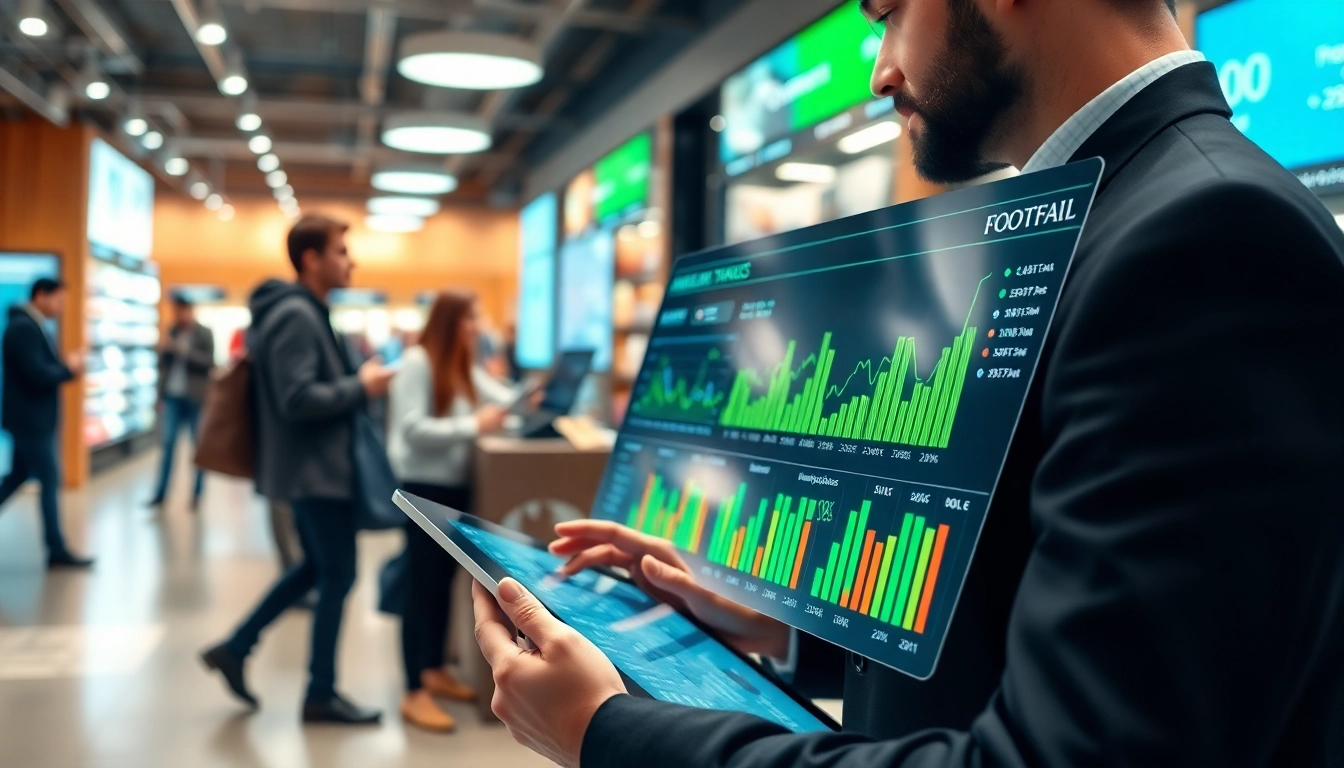
Understanding Retail Footfall Analytics
In the vibrant world of retail, understanding customer behavior is crucial for success. One of the most powerful tools available to retailers today is retail footfall analytics. This method goes beyond simple counts of foot traffic; it involves deep insights into customer flows and behaviors within a retail space. It provides invaluable data that can drive strategic decision-making, enhance customer experiences, and ultimately boost sales.
Definition and Importance of Retail Footfall Analytics
Retail footfall analytics refers to the systematic measurement and analysis of the number of customers entering, moving through, and interacting within a retail environment. By examining movement patterns and dwell times, retailers can gather insights that influence various aspects of their operations. The importance of footfall analytics cannot be understated; it helps retailers identify not only how many customers are visiting but how effectively these customers engage with different products or zones throughout the store.
Key Metrics Measured in Footfall Analytics
Several critical metrics are analyzed within footfall analytics:
- Traffic Count: The basic measure of how many customers enter a location within a specific timeframe.
- Dwell Time: The amount of time a customer spends in a particular area, which can indicate product interest and engagement.
- Conversion Rate: The percentage of visitors that make a purchase, key for assessing the effectiveness of marketing strategies.
- Path Analysis: Tracking the routes customers take can unveil some of the most critical areas and displays influencing their decisions.
- Peak Times: Identifying when traffic is highest aids in staffing and stock management, ensuring optimal service and inventory availability.
Technology Behind Retail Footfall Analytics
The technology driving retail footfall analytics has advanced significantly, offering various solutions for retailers. Typical technologies include:
- Infrared Sensors: Commonly used to count the number of entrants and exits in a store
- Video Analytics: Using cameras to gather data on customer movements, this can provide a more nuanced understanding of behaviors.
- Mobile Tracking: Tracking customers' smartphones can give insights into customer movement and their interactions with promotions or product placements.
These technologies are often integrated with dashboards and reporting tools that provide retailers with real-time data and insights into customer behavior.
How to Measure Retail Footfall Effectively
Tools for Measuring Footfall Accurately
To accurately measure retail footfall, retailers should consider using a combination of hardware and software solutions:
- People Counters: Devices installed at entrances to measure footfall reliably.
- Customer Relationship Management (CRM) Systems: Platforms that can integrate footfall data with customer profiles and purchase histories.
- Heatmap Analytics Tools: These visualize traffic patterns in specific store areas, allowing for more precise marketing and layout adjustments.
Best Practices for Data Collection
Collecting accurate footfall data requires careful planning and implementation. Here are some best practices:
- Ensure the tools are calibrated and regularly checked for accuracy.
- Collect data across different times and days to identify patterns rather than relying on single-day metrics.
- Integrate footfall data with sales data for comprehensive insights.
- Use aggregating tools that can visualize data trends over time instead of raw counts only.
Common Errors in Footfall Measurement
Despite advancements in technology, common errors can still occur:
- Counting anomalies: For example, if a door is left open, it might lead to inaccurate counts.
- Weather influences: Conditions like rain or snow may deter foot traffic, skewing data.
- Ignoring data context: Relying solely on footfall without considering external variables can lead to misinterpretations.
Leveraging Retail Footfall Analytics for Business Growth
Data-Driven Decision Making
Retail footfall analytics empowers retailers to make decisions based on solid data rather than intuition alone. This data-driven approach allows businesses to:
- Tailor marketing campaigns based on customer traffic patterns.
- Optimize product placements to draw in more customers based on their movements.
- Forecast staffing needs during peak times to enhance customer service.
Enhancing Customer Experience through Insights
Understanding customer behavior can lead to enhanced shopping experiences. By utilizing insights from footfall analytics, retailers can:
- Determine high-traffic areas and adjust layouts to promote easier navigation.
- Create targeted promotions based on dwell time data.
- Engage with customers through tailored services based on shopping patterns.
Strategies for Inventory and Staffing Optimization
The insights gained from retail footfall analytics can also streamline operations. Specific strategies include:
- Adjusting inventory levels based on traffic and sales data to avoid stockouts or overstock situations.
- Scheduling staff based on historical footfall data to meet customer demand efficiently.
- Conducting regular reviews of inventory placement and staff placement for optimal operation efficiency.
Analyzing and Interpreting Footfall Data
Identifying Trends in Customer Movement
Once footfall data is collected, the next step involves analysis. An effective analysis should focus on:
- Identifying peak shopping hours and days to anticipate staff needs and stock levels.
- Recognizing patterns in customer paths within the store to adjust layouts or offerings.
- Segmenting customer data for targeted marketing efforts based on behavior profiles.
Effective Ways to Analyze Collected Data
To get valuable insights from footfall data, consider the following methods:
- Use software tools that specifically analyze retail footfall data for visual insights.
- Regularly compare footfall trends against sales performance to correlate data.
- Engage with teams across sales, marketing, and operations to leverage multi-departmental insights on data analysis.
Using Analytics for Store Layout Improvement
Insights from footfall analytics can guide decisions about physical store layouts. Retailers can:
- Create a flow that encourages customer movement towards high-margin products.
- Eliminate bottlenecks identified through customer movement statistics.
- Facilitate better promotional displays based on traffic patterns.
Future Trends in Retail Footfall Analytics
The Role of AI and Machine Learning in Analytics
The future of retail footfall analytics is likely to be shaped significantly by advancements in artificial intelligence (AI) and machine learning. These technologies can enable:
- Predictive analytics that forecast customer behaviors based on historical data.
- Automated insights that optimize inventory and staffing more accurately.
- Enhanced personalization for shopper’s experiences through advanced customer segmentation.
Integration of Omnichannel Strategies
Footfall analytics will increasingly integrate with online and mobile data to create a seamless shopping experience across all platforms. Retailers can:
- Analyze foot traffic alongside online shopping habits to develop effective omnichannel strategies.
- Utilize footfall data to understand impacts from online campaigns on in-store traffic.
- Sync customer profiles from all channels for a more personalized interaction.
Predictive Analytics for Future Retail Success
Retailers will leverage predictive analytics to make proactive decisions, enhancing competitiveness. Benefits include:
- Improved demand forecasting and inventory management.
- Better allocation of resources to align with predicted customer behavior.
- Strategic planning for marketing efforts to reflect anticipated customer traffic.
Frequently Asked Questions
What is footfall analytics?
Footfall analytics is the collection and analysis of data regarding the number of people entering and moving within a physical retail space, providing insights into customer behavior and engagement.
How can retailers measure footfall?
Retailers can measure footfall using various technologies such as infrared sensors, video analytics, and mobile tracking, often delivered via integrated software solutions.
Why is dwell time important?
Dwell time indicates customer interest and engagement with products. Analyzing dwell time helps retailers optimize layouts and product placements to enhance experiences.
What metrics should retailers focus on?
Key metrics include traffic count, dwell time, conversion rates, path analysis, and peak times, all of which inform marketing, staffing, and layout strategies.
How can analytics improve customer experience?
Analytics provide insights that help personalize engagement, optimize store layouts, and tailor marketing efforts, enhancing the overall shopping experience for customers.